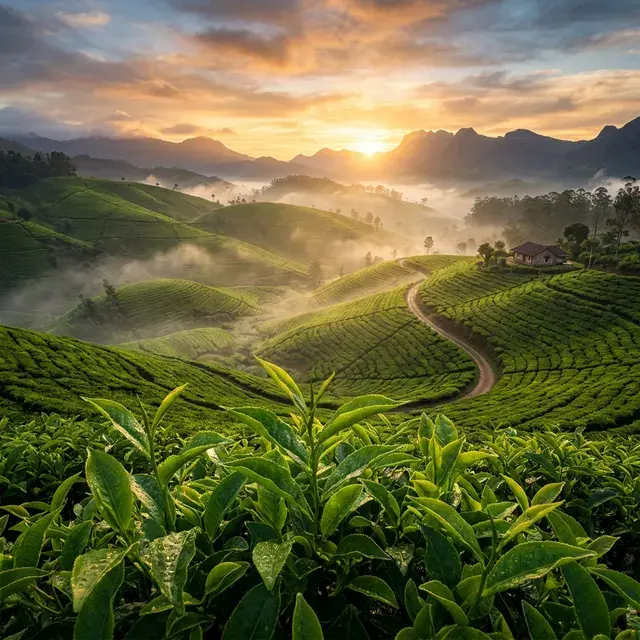
The Legacy of
Ceylon Tea
How Coffee Gave
Way to Tea.
In the 1860s, a devastating leaf blight wiped out Sri Lanka's thriving coffee industry. Out of ruin, a Scottish planter named James Taylor sparked a revolution by planting the first commercial tea estate in Loolecondera, forever changing the island's destiny.
1867
The Pioneer
James Taylor planted the first commercial 19-acre tea crop at Loolecondera Estate.
1873
First Export
The first documented shipment of Ceylon tea—23 lbs—arrived in London.
1890
Global Auction
The Colombo Tea Auction was formed, becoming the world's largest single-origin tea auction.
1932
Tea Research
Tea Research Institute founded to improve scientific cultivation methods.
Three Distinct Elevations
Sri Lanka's unique topography means tea is grown at three main elevations, each producing its own distinct flavor profile, color, and aroma.
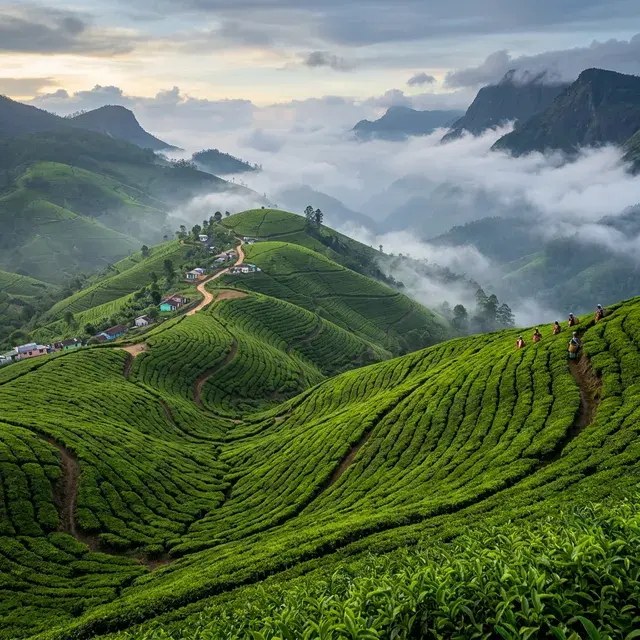
High Grown (Up-Country)
Produces the most exquisitely flavored teas, celebrated for their golden liquor, intense aroma, and delicate, brisk taste. Nuwara Eliya and Uva regions are renowned.
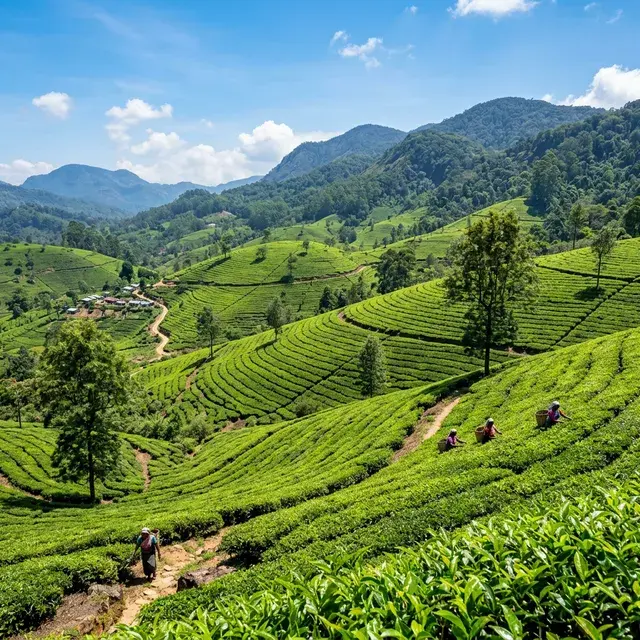
Mid Grown (Mid-Country)
Yields teas with a robust character, rich flavor, and good color. These full-bodied, malty varieties often come from the Kandy region.
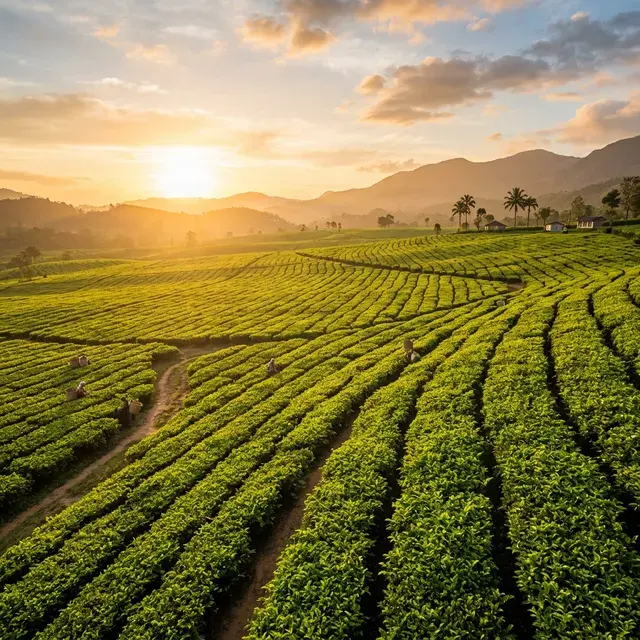
Low Grown (Low-Country)
Subjected to high sunshine and warmth, producing a burgundy brown liquor and a heavy, robust taste, featuring visually impressive leaf appearances.
The Gold Standard of
Global Export
Ozone-friendly, hand-picked, and manufactured following orthodox methods. The reputation of Ceylon Tea was built on relentless quality controls and an authentic supply chain stretching from central highlands over the Indian Ocean to the world.
Maritime Legacy
Exporting over oceans since 1873.
150+ Countries
A globally recognized mark of purity.
Ozone Friendly
Recognized globally for sustainable agriculture.